
Microdosing Semaglutide Chart: A Monthly Dose Guide For Josie Patients
A semaglutide microdosing chart that supports comfort, longevity, and gentle month-to-month increases.
This is some text inside of a div block.
July 23, 2025
Learn how compounded tirzepatide works, why women 40+ are choosing it, and if oral or injectable is right for you.

The Josie Team
Medically Reviewed by


This article is for educational purposes only and is not medical advice. Compounded GLP-1 medications are not FDA-approved. A licensed provider must review your health information before any prescription is written. Individual results vary.
Midlife women are hearing more about compounded tirzepatide as GLP-1 medications stay in the news. Compounded tirzepatide isn’t FDA-approved, and it may come with risks tied to dosing, pharmacy preparation, side effects, delivery method, and unclear instructions. Before anyone considers it, a licensed healthcare provider should review their health history, current medications, risks, and other options.
Compounded tirzepatide is a prescription medication that is not FDA-approved. It may be prepared by a compounding pharmacy for a specific patient when a licensed provider determines it may be appropriate.
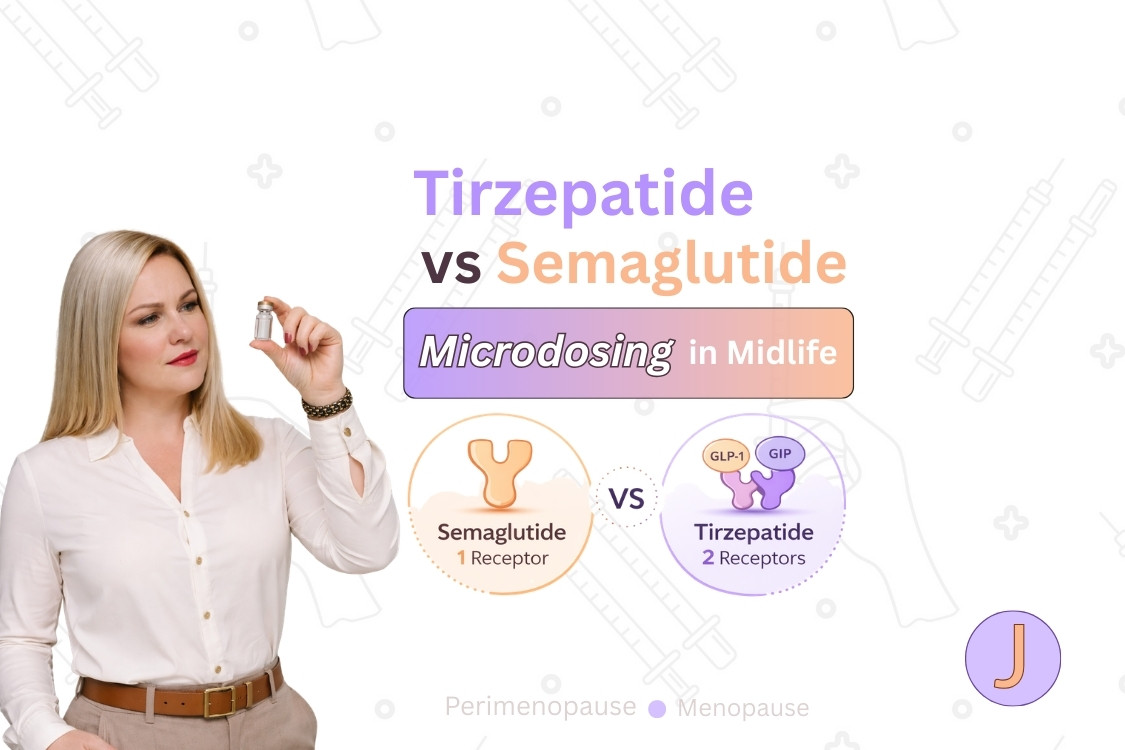
Tirzepatide is often described as a dual GIP and GLP-1 receptor agonist. That means it acts on two hormone receptor pathways involved in blood sugar, appetite, and digestion. This description should not be used to suggest that compounded tirzepatide is FDA-approved, interchangeable with a branded product, or appropriate for every patient.
FDA-approved medications go through FDA review for safety, effectiveness, and quality before approval. Compounded medications do not go through that same FDA review before they’re marketed.
FDA has increased scrutiny around compounded GLP-1 medications. The agency has warned about unapproved GLP-1 products, dosing errors, misleading marketing, adverse event reports, and mass-marketed products that may be presented in ways that confuse patients. FDA has also taken steps to restrict GLP-1 active pharmaceutical ingredients intended for certain non-FDA-approved compounded drugs.
Key points:
A licensed provider should decide whether any GLP-1 related medication fits a patient’s health history, current medications, and risk factors.
Compounded tirzepatide can come with risks related to side effects, dose measurement, pharmacy preparation, product variation, and a patient’s personal health history.
FDA scrutiny around compounded GLP-1 medications has increased. FDA has warned about unapproved GLP-1 products, dosing errors, fraudulent products, adverse event reports, and marketing claims that may mislead patients.
Patients should be cautious with any product that sounds too simple, too inexpensive, or too close to an FDA-approved brand-name medication.
Dosing confusion is one of the biggest practical risks with compounded injectable tirzepatide.
Some compounded products may come in vials or syringes. Patients may need to understand units, milliliters, milligrams, concentration, and syringe markings. Mistakes can happen when instructions are unclear or when a patient tries to adjust a dose without provider guidance.
Compounded products may differ by pharmacy. The concentration, packaging, storage needs, instructions, and delivery method may not be the same from one product to another.
That variation can make instructions harder to follow, especially if a patient has used a different GLP-1 medication before.
Side effects can happen. Common side effects with GLP-1 related medications can include nausea, vomiting, diarrhea, constipation, bloating, abdominal discomfort, reflux, appetite changes, and fatigue. Serious adverse events have been reported; the exact frequency is not well established.
These risks don’t mean every compounded product is automatically unsafe. They do mean patients need clear medical guidance and should understand the risks before starting.
Brand-name tirzepatide products have FDA-approved labels, approved delivery formats, and specific dosing instructions. Examples include Zepbound and Mounjaro.
Compounded tirzepatide is different because it isn’t FDA-approved. It may also differ in formulation, strength, concentration, delivery method, packaging, storage instructions, and dose measurement.
Patients shouldn’t assume compounded tirzepatide is interchangeable with a branded product. Even when the names sound similar, the product, instructions, and risks may not be the same.
A careful provider conversation should include what’s being prescribed, how it’s prepared, how it’s measured, how it should be used, and what side effects or warning signs to watch for.
Many women start asking new questions about weight, appetite, body composition, sleep, stress, and energy during perimenopause, menopause, and postmenopause.
Midlife can bring real changes. Hormones shift. Sleep may get lighter. Hot flashes can interrupt rest. Stress can feel harder to recover from. Muscle can become harder to maintain without strength training and enough protein. Weight-related frustration may build, even for women who feel like they’re doing many things right.
That doesn’t mean compounded tirzepatide directly addresses menopausal symptoms, changes hormone levels, specifically reduces belly fat, or ensures weight loss for everyone. It means some midlife women may ask a licensed provider whether GLP-1 therapy belongs in the larger conversation.
A woman might ask a licensed provider about compounded tirzepatide if she wants to understand whether a GLP-1 related medication could fit her health history, medication list, weight-related goals, and personal risk factors.
This should be a medical conversation, not a self-diagnosis. A provider may review health history, current medications, prior weight management attempts, blood sugar concerns, digestive history, gallbladder history, pregnancy status, contraception, and other factors.
Interest doesn’t equal eligibility. A provider has to review the full picture.
Some people may not be candidates for tirzepatide. Others may need extra caution.
A licensed provider may ask about:
This list doesn’t decide eligibility. It simply shows why provider review matters. A medication that may be considered for one person may not be appropriate for another.
Side effects can vary from person to person. Common side effects with GLP-1 related medications can include nausea, constipation, diarrhea, vomiting, bloating, abdominal discomfort, reflux, appetite changes, and fatigue.
FDA-approved tirzepatide labeling also includes warnings and precautions that patients should review with a licensed provider. These include thyroid C-cell tumor risk, pancreatitis, gallbladder problems, low blood sugar risk when used with certain diabetes medications, kidney problems related to dehydration, allergic reactions, and delayed stomach emptying.
Some symptoms may overlap with issues midlife women already deal with, such as fatigue, digestive changes, sleep disruption, and appetite changes. That can make it harder to tell what’s coming from the medication, what’s related to daily habits, and what may need medical attention.
This side effect list isn’t exhaustive. A provider should explain what side effects may happen, what can be monitored at home, and what symptoms need prompt medical care.
FDA-approved tirzepatide labeling includes information about oral contraceptives because tirzepatide delays gastric emptying. This may affect exposure to some oral medications, including oral hormonal contraceptives.
Women who use oral contraceptives should discuss this with a licensed provider before starting tirzepatide or changing a dose. A provider can explain whether backup or non-oral contraception should be considered based on the medication label, health history, and pregnancy plans.
This section is especially relevant for perimenopausal women who may still be able to become pregnant, even if cycles are irregular.
Compounded tirzepatide may be prepared in different forms depending on the pharmacy, prescription, and provider’s instructions.
Forms may include:
The form can affect how the medication is used, measured, stored, and explained. Patients shouldn’t assume different forms have the same use, absorption, or expected response. Clear instructions from the provider and pharmacy are essential.
Patients should ask direct questions before starting any compounded GLP-1 medication.
Useful questions include:
If the instructions don’t make sense, don’t guess. Ask the provider or pharmacy before taking the medication.
A provider may also discuss nutrition, protein intake, hydration, fiber, strength training, sleep, stress, and digestive support as part of a broader care plan.
These topics still matter because midlife weight and health questions are rarely about one thing. Food intake, muscle, movement, sleep, stress, medications, hormones, and medical history can all shape the conversation.
Lifestyle habits shouldn’t be presented as a way to ensure specific results from a medication. They’re simply part of the bigger picture a provider may review.
Compounded tirzepatide and compounded semaglutide are not FDA-approved. They’re different prescription medications, and they shouldn’t be treated as interchangeable.
The main difference is how they work. Compounded semaglutide is related to the GLP-1 pathway. Compounded tirzepatide is related to both the GIP and GLP-1 pathways.
Compounded versions do not go through FDA review for safety, effectiveness, or quality before they’re dispensed. A licensed provider should explain the differences, possible risks, available alternatives, and whether either option may be appropriate based on the patient’s health history and goals.
Patients should contact a licensed provider if they have side effects that are severe, persistent, confusing, or different from what they were told to expect.
That includes severe or ongoing nausea, vomiting, signs of dehydration, severe abdominal pain, symptoms that may suggest gallbladder problems, allergic reaction symptoms, low blood sugar symptoms, or any dosing mistake.
Patients should also contact a provider before stopping, restarting, changing the dose, or combining medications.
These points are educational and should not replace guidance from a licensed healthcare provider.
No. Compounded tirzepatide is not FDA-approved.
No. Patients shouldn’t assume compounded tirzepatide is the same as Zepbound or Mounjaro. Compounded medications may differ in formulation, strength, concentration, packaging, instructions, and delivery method.
Compounded tirzepatide may come as injections, dissolvable tablets, or oral drops, depending on the pharmacy, prescription, and provider’s instructions.
Risks may include side effects, dosing errors, concentration differences, formulation differences, unclear instructions, pharmacy variation, medication interactions, and risks based on personal health history.
FDA-approved tirzepatide labeling includes information about delayed gastric emptying and oral contraceptives. Women using oral contraceptives should discuss this with a licensed provider.
A licensed healthcare provider decides after reviewing a patient’s health information, medications, risks, and available options.
This article was prepared using source context from FDA materials on compounded GLP-1 medications, FDA statements on non-FDA-approved GLP-1 products, FDA policy updates for GLP-1 compounding, and prescribing information for FDA-approved tirzepatide products.
This article is for educational purposes only and is not a substitute for professional medical advice. Individual results vary. Timelines, costs, and outcomes can differ by pharmacy, insurance, and individual factors. Compounded GLP-1 medications are not FDA-approved and may differ from branded products in formulation, strength, or delivery method. Common side effects with GLP-1 medications can include nausea, bloating, fatigue, and constipation. Serious adverse events have been reported; the exact frequency is not well established. Always talk with a licensed healthcare provider about the risks, benefits, and alternatives before starting or stopping any medication.