
Microdosing Semaglutide Chart: A Monthly Dose Guide For Josie Patients
A semaglutide microdosing chart that supports comfort, longevity, and gentle month-to-month increases.
This is some text inside of a div block.
July 23, 2025
Estrogen decline in midlife can change how the body experiences a GLP-1 dose.

The Josie Team
Medically Reviewed by


GLP-1 dose tolerance can change in midlife because declining estrogen affects several metabolic systems that influence how a fixed medication dose is experienced.
During perimenopause and menopause, estrogen levels gradually decline and fluctuate. Estrogen helps regulate insulin sensitivity, appetite signaling, digestive motility, and muscle maintenance. When these systems begin to shift, the metabolic environment that GLP-1 medications interact with also changes.
GLP-1 medications such as semaglutide and tirzepatide work by influencing many of these same pathways. They help regulate blood sugar, slow gastric emptying, and strengthen fullness signals in the brain. Because both estrogen and GLP-1 therapy affect these systems, hormonal changes can alter how a given dose feels even when the medication itself has not changed.
By dose tolerance, we mean the overall experience of taking a medication at a specific dose. This includes digestive side effects, appetite suppression intensity, glucose stability, and whether the dose feels sustainable over time.
The medication still works the same way. What changes is the body its working in.
Key Definition: GLP-1 Dose Tolerance
GLP-1 dose tolerance refers to how consistently the body can respond to a specific medication dose over time. It reflects the combined experience of appetite suppression, digestive side effects, glucose stability, and whether the dose remains sustainable during ongoing treatment.
This concept becomes especially important during midlife, when hormonal shifts can influence several metabolic systems that GLP-1 medications interact with.
Estrogen decline can change GLP-1 dose tolerance because estrogen helps regulate several metabolic systems that influence how the body responds to a given medication dose.
These systems include insulin responsiveness, appetite regulation, digestive motility, and lean mass maintenance. Because these processes work together, changes in one area can influence the others.
In midlife, estrogen decline can affect several of the systems that shape how GLP-1 medications are experienced, including:
.jpg)
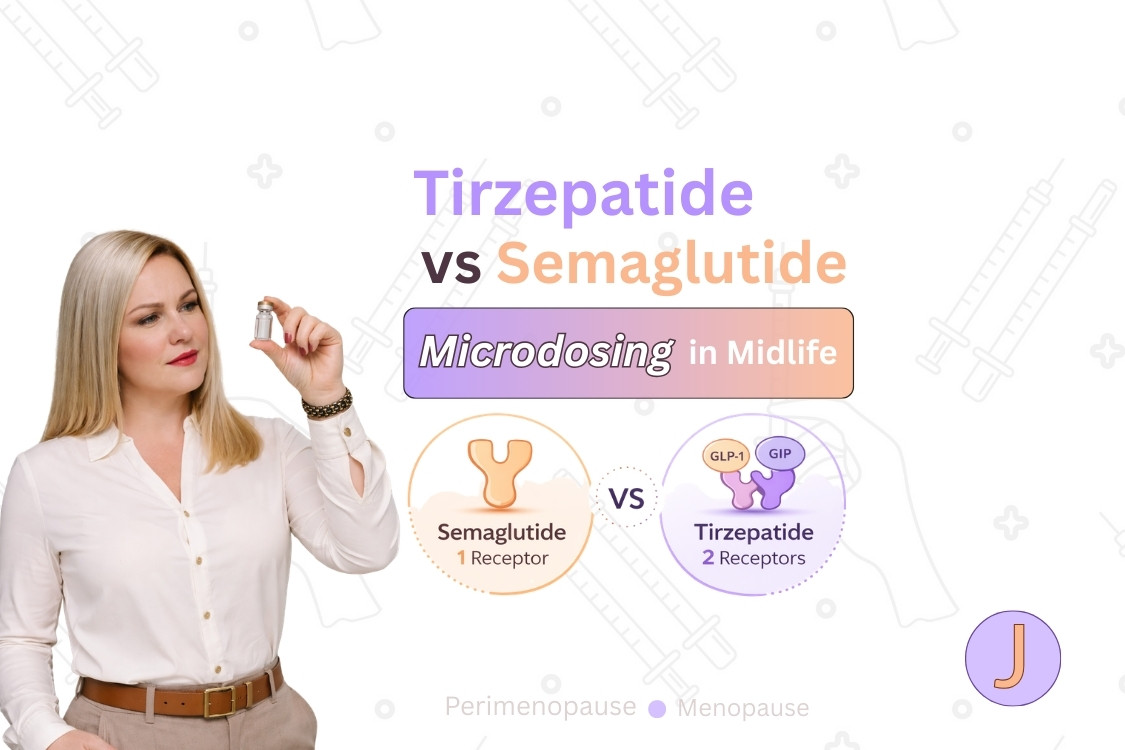
GLP-1 receptor agonists such as semaglutide and tirzepatide act on these same systems by stimulating insulin release, strengthening satiety signals in the brain, and slowing gastric emptying. Tirzepatide also activates GIP receptors, but both medications ultimately influence insulin activity, appetite regulation, and digestive timing.
Because estrogen and GLP-1 medications influence overlapping metabolic pathways, hormonal shifts can change how a fixed dose is experienced.
In midlife, dose tolerance is shaped not only by the medication itself, but also by how these metabolic systems respond as hormone levels change. This interaction is central to understanding the role of low-dose GLP-1 medication during perimenopause and menopause.
Glucose regulation often becomes more variable after age 40 because declining estrogen reduces insulin sensitivity and changes how the body responds to rising blood sugar after meals.
Estradiol helps support insulin signaling in skeletal muscle and helps regulate how much glucose the liver releases into the bloodstream. When estradiol levels decline during the menopausal transition, insulin sensitivity often decreases and blood sugar levels after meals can become less predictable.
Research suggests insulin sensitivity can decline by roughly 10 to 20 percent across the menopausal transition, which can widen post-meal glucose swings even when diet and activity patterns remain similar.
As blood sugar responses become more variable, insulin demand can also fluctuate. GLP-1 medications stimulate insulin release in response to rising glucose, so changes in glucose patterns can influence how noticeable the medication’s effects feel from one month to the next.
When insulin sensitivity is stable, the body’s response to GLP-1 therapy tends to feel more consistent. During hormonal transition, insulin responsiveness can shift independently of medication dose. This means a dose that felt balanced earlier in perimenopause may feel stronger or weaker later as baseline insulin sensitivity continues to change.
The medication has not weakened. The glucose environment surrounding it has changed.
Hormonal shifts during perimenopause can change satiety regulation because estrogen helps influence the brain centers that control hunger and fullness.
Estrogen interacts with hypothalamic appetite centers that regulate hunger onset, meal termination, and reward-driven eating behavior. During reproductive years, appetite patterns tend to follow relatively stable rhythms. During perimenopause, estrogen levels fluctuate more unpredictably before eventually stabilizing at lower levels, which can make appetite signals less consistent.
When estrogen variability increases, several appetite-related changes may occur:
GLP-1 medications enhance satiety signaling and prolong fullness through both brain appetite pathways and slower gastric emptying. When baseline hunger rhythms become inconsistent, appetite suppression from GLP-1 therapy may feel stronger during some periods and less noticeable during others, even when the dose has not changed.
Because appetite patterns influence how much and how often someone eats, changes in hunger signals can also affect how strong the medication feels. When baseline hunger increases, GLP-1 therapy may feel stabilizing. When hunger temporarily drops, the same dose may feel more intense.
These shifts reflect hormonal variability rather than a change in how the medication works.
Estrogen fluctuations during perimenopause can affect gastrointestinal tolerance because estrogen helps regulate digestive motility and autonomic nervous system balance.
Estrogen influences smooth muscle coordination throughout the gastrointestinal tract. When estrogen levels fluctuate, gastric motility, or the speed at which food moves through the stomach, can become less predictable.
Gastric motility plays an important role in how fullness and nausea are experienced. GLP-1 medications slow gastric emptying to improve post-meal glucose control and prolong satiety. GLP-1 receptor agonists can slow gastric emptying by roughly 20 to 40 percent, which helps extend satiety and moderate post-meal glucose spikes. When baseline digestive rhythm is stable, this effect tends to feel consistent. When gastric motility becomes more variable, the same degree of medication-related slowing may feel stronger.
During the midlife transition, several overlapping factors can influence digestive sensitivity:
Because these factors affect digestive rhythm, they can influence how strongly GLP-1–related gastric slowing is perceived. At certain points in the hormonal transition, fullness or nausea may feel more noticeable even if the medication dose has not changed.
The medication has not become stronger. Digestive predictability has narrowed.
Estrogen decline can influence GLP-1 dose intensity because estrogen helps support muscle maintenance, and muscle mass plays a major role in regulating metabolic rate.
Estrogen supports muscle protein synthesis and helps moderate age-related muscle loss. When estrogen levels decline during midlife, lean mass loss can accelerate, especially without regular resistance training. Research suggests adults can lose roughly 3 to 8 percent of lean muscle mass per decade after age 40, especially when resistance training is absent.
Lean mass is a major driver of resting metabolic rate, which determines how many calories the body needs each day. When lean mass decreases, resting metabolic rate often falls as well. As daily energy needs drop, the same level of appetite suppression can create a larger relative calorie deficit.
Clinical trials highlight how important this relationship can be. In the STEP 1 trial of semaglutide, approximately 38 to 40 percent of total weight lost was lean mass on average. For midlife women who may already be experiencing gradual muscle decline, this interaction can influence how strongly a GLP-1 dose is experienced.
If resting metabolic rate declines while appetite suppression remains the same, the relative calorie deficit may increase. When that deficit becomes larger, the medication can feel more intense even though the dose itself has not changed.
This is why muscle preservation is an important part of maintaining dose tolerance in midlife. Resistance training helps support lean mass retention, which helps stabilize metabolic rate and reduce variability in how a given GLP-1 dose is experienced.
GLP-1 dose-response curves help explain how medication effects change as dose increases, but they are based on population averages and do not capture how hormonal changes can influence dose tolerance in the same individual over time.
These curves are established through large randomized clinical trials that measure efficacy and tolerability across broad adult populations. They consistently show that as dose increases, receptor activation increases, and average metabolic effects become stronger.
Those findings remain valid. They describe how the medication performs on average across large groups of patients.
However, clinical trials measure average responses across populations with relatively stable physiology. During the menopausal transition, hormone levels can fluctuate over months or years, which can change the metabolic environment a medication is interacting with.
When metabolic conditions remain relatively stable, responses to a given dose tend to feel consistent. When baseline physiology becomes more variable, the same dose may feel different at different points in the transition.
This does not weaken the evidence behind GLP-1 medications. Instead, it helps explain why population-based dosing data may feel less predictable during periods of hormonal change.
Estrogen decline can influence GLP-1 dose tolerance because estrogen helps regulate several metabolic systems that shape how the body responds to a given medication dose.
In midlife, four core systems are especially important:
Each of these systems can influence dose tolerance on its own, but they also interact with one another.
For example, changes in insulin sensitivity can alter blood sugar stability, which can influence hunger signals and appetite patterns. Appetite patterns affect how much someone eats, which in turn interacts with lean mass maintenance and overall metabolic rate. At the same time, gastric motility affects how quickly food leaves the stomach, shaping both satiety perception and nausea sensitivity.
Because these systems are connected, hormonal shifts rarely affect just one pathway. Instead, several small changes can occur at the same time, which can make the body’s response to a fixed GLP-1 dose feel less predictable.
When estrogen levels remain relatively stable, these metabolic systems tend to stay better coordinated. During perimenopause and menopause, hormonal fluctuations can make that coordination less consistent.
The medication still acts on the same receptors, but the metabolic environment surrounding those receptors becomes less predictable.
That shift in metabolic coordination is what drives many of the tolerance changes women notice during the menopausal transition.
Estrogen decline can make GLP-1 dose tolerance less predictable, which is why some clinicians take a calibration-aware approach when evaluating dose response during midlife.
Calibration does not change how GLP-1 medications work. Instead, it recognizes that medication exposure interacts with the body’s current metabolic state.
During the menopausal transition, several changes can occur at the same time. Glucose variability may increase, appetite patterns may fluctuate, and lean mass may gradually decline. When these shifts occur together, a dose that previously felt balanced may begin to feel stronger if appetite suppression creates a larger calorie deficit or digestive sensitivity increases.
The opposite pattern can also occur. If insulin resistance increases and baseline hunger rises, the same GLP-1 dose may feel less noticeable because the medication is helping stabilize a higher metabolic demand.
Because of this interaction between physiology and medication exposure, evaluating dose tolerance in midlife often involves monitoring more than scale weight. Clinicians may consider factors such as:
A calibration-aware approach does not mean lowering dose automatically. It means aligning medication exposure with the body’s current physiology rather than assuming baseline metabolic conditions remain constant.
Estrogen decline does not weaken GLP-1 medications. Instead, it widens the range in which a fixed dose may be experienced.
As insulin sensitivity shifts, appetite patterns fluctuate, gastric motility changes, and lean mass gradually declines, the same medication exposure can feel different at different stages of the menopausal transition. These changes reflect shifts in baseline physiology rather than changes in how the medication works.
For this reason, dose tolerance in midlife is shaped by the interaction between medication exposure and the body’s current metabolic state.
Monitoring patterns can help identify when these shifts are occurring. For example, appetite suppression that begins to interfere with protein intake, new gastrointestinal symptoms after a previously stable period, or declining strength during weight loss may signal that baseline physiology has changed.
When adjustments are needed, they should occur under clinician supervision and be guided by objective markers such as body composition trends, glycemic stability, and medication tolerability patterns. Unsupervised dose changes can increase variability rather than reduce it.
The goal is not automatically lowering dose. The goal is maintaining alignment between medication exposure and the body’s physiology as hormone levels change during midlife. Medication decisions should always be made with guidance from a qualified healthcare professional.
Menopause can change how a GLP-1 dose feels because estrogen influences insulin sensitivity, appetite signals, digestion, and muscle mass. As hormone levels fluctuate during perimenopause and decline after menopause, these metabolic changes can alter how the body experiences the same medication dose.
Estrogen helps regulate hunger and satiety signals in the brain. During perimenopause, fluctuating estrogen levels can disrupt these appetite rhythms. Because GLP-1 medications also act on appetite pathways, the same dose may feel stronger or weaker as hormone patterns shift.
Hormonal changes during perimenopause can influence digestive motility and autonomic nervous system balance. Because GLP-1 medications slow gastric emptying, shifts in digestive rhythm can make fullness or nausea feel more noticeable at certain points in the hormonal transition.
Estrogen decline can influence metabolism, insulin sensitivity, and muscle mass. These changes may alter appetite patterns and energy balance, which can affect how weight loss progresses while using GLP-1 medications during midlife.
Lean muscle mass helps regulate resting metabolic rate and overall energy needs. During midlife, estrogen decline can accelerate muscle loss. Preserving muscle through resistance training and adequate protein intake helps support metabolic stability and consistent dose tolerance.
GLP-1 dosing decisions are based on how the body responds to the medication over time. Because hormonal shifts during menopause can influence appetite, digestion, and metabolic patterns, clinicians may monitor these factors when evaluating dose tolerance and long-term treatment plans.
PMC.
Estrogen, Menopause, and Metabolic Regulation.
https://pmc.ncbi.nlm.nih.gov/articles/PMC12431702/
Frontiers in Endocrinology.
GLP-1 Receptor Agonists and Cardiometabolic Effects.
https://pmc.ncbi.nlm.nih.gov/articles/PMC11620716/
Endocrine Reviews.
Estrogen and Regulation of Energy Balance and Metabolism.
https://pmc.ncbi.nlm.nih.gov/articles/PMC2804956/
The New England Journal of Medicine.
Once-Weekly Semaglutide in Adults with Overweight or Obesity (STEP 1 Trial).
https://www.nejm.org/doi/full/10.1056/NEJMoa2032183
PMC.
Estrogen Signaling and Metabolic Homeostasis.
https://pmc.ncbi.nlm.nih.gov/articles/PMC3660717/