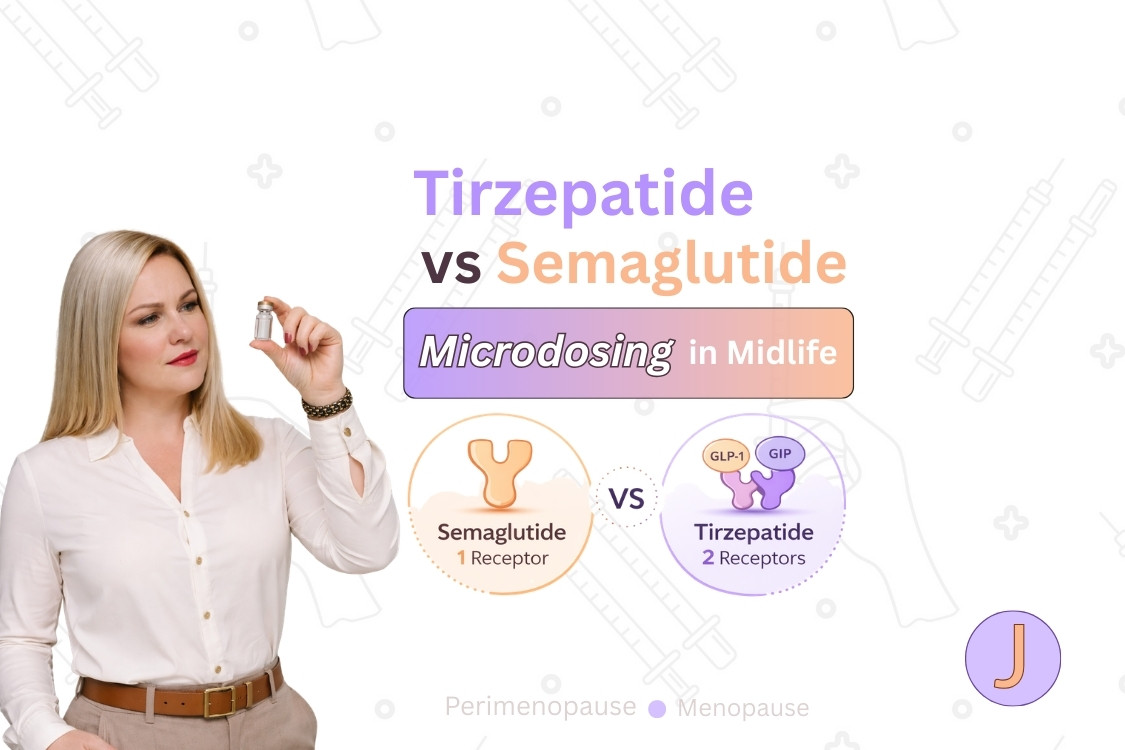

Microdosing Semaglutide Chart: A Monthly Dose Guide For Josie Patients
A semaglutide microdosing chart that supports comfort, longevity, and gentle month-to-month increases.
This is some text inside of a div block.
July 23, 2025
A simple breakdown of GLP-1 microdose vs full therapeutic dose. What they are and which plan is right for you.

The Josie Team
Medically Reviewed by

Perimenopause and menopause bring different challenges that we aren’t used to. Weight gain in areas we never thought was possible, hormone fluctuations, mood shifts, stalled energy, and even food cravings that are hard to control. It’s why many women like us are at the very least looking into GLP-1 therapy.
With the rise in popularity of microdosing GLP-1s in menopause, it presents a choice that women are becoming more aware of. As more options become available, it helps to understand what each approach really means before choosing the one that fits your lifestyle.
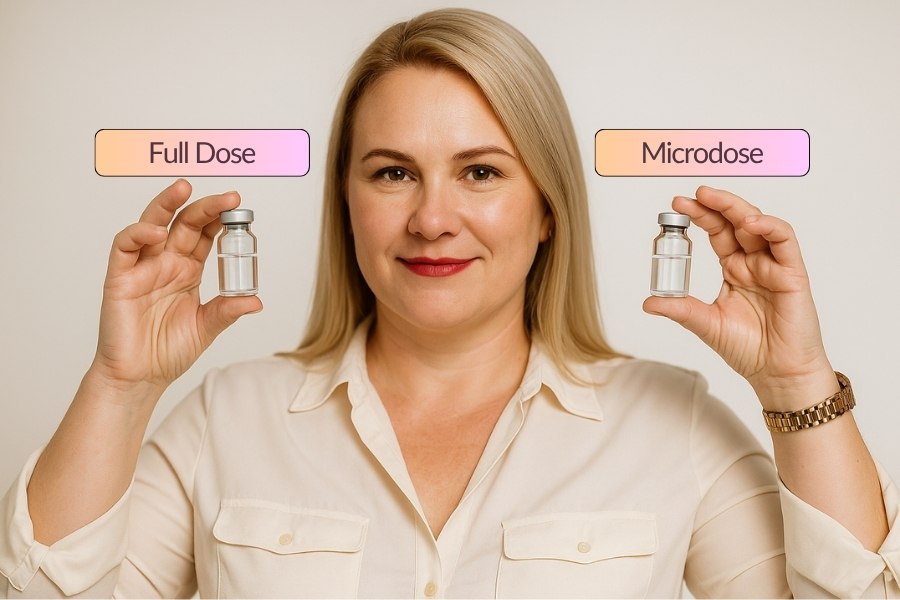
The difference between a full therapeutic dose and a microdose of GLP-1 medication comes down to how much you take and what the goal is. A full therapeutic dose is the standard amount of GLP-1 medication, such as semaglutide or tirzepatide, found in brand-name options like Wegovy® or Zepbound®. These doses are usually increased slowly over time and are often used with a doctor’s guidance to help manage weight or support healthy blood sugar.
A microdose uses a much smaller amount of the same medication, often custom-made (compounded) by a licensed pharmacy. It’s chosen by women who want a gentler start or who are more sensitive to higher doses. Microdosing can help the body adjust gradually and may cause fewer unwanted effects, though it typically leads to more subtle results.
Further learning: Know the difference between compounded vs brand name GLP-1s
No matter which approach you choose, it’s best to talk with a licensed provider who can help you decide what’s right for your body and your goals.
Now that you know the difference, let’s look at how to tell which plan might be the better fit for your goals.
There isn’t a single “best” choice for everyone. The right plan depends on your goals, how your body responds, and what your provider feels is the safest and most effective fit for you.
You might be a better fit for a full therapeutic dose if:
You might prefer a microdose if:
Some women find that starting with a microdose and increasing to a full dose later gives them the best balance. The key is to work closely with your provider and adjust based on how your body feels along the way.
Every woman’s plan is personalized, but here’s a simple look at how full therapeutic and microdose plans often progress over time.
At Josie, we’ve seen firsthand how women use both full therapeutic doses and microdoses in different ways.
More than 1,000 women are currently on microdose plans, and over 5,000 are on full-dose plans.
Of those who start with a microdose, about 68% choose to stay there, while 32% eventually move up to a full therapeutic dose once they and their provider feel ready.
A small number of women who reach their goals on a full dose later transition down to a microdose to maintain progress more gently. Everyone’s path looks a little different, which is why the best plan is always one that fits your body, your goals, and your provider’s guidance.
Whether you begin with a microdose or start with a full therapeutic plan, the goal is to feel balanced, strong, and more like yourself again. The right approach is the one that supports your body, your lifestyle, and your long-term wellness.
If you are ready to explore your options, Josie’s licensed providers can help personalize a plan that meets you where you are and grows with you over time.